
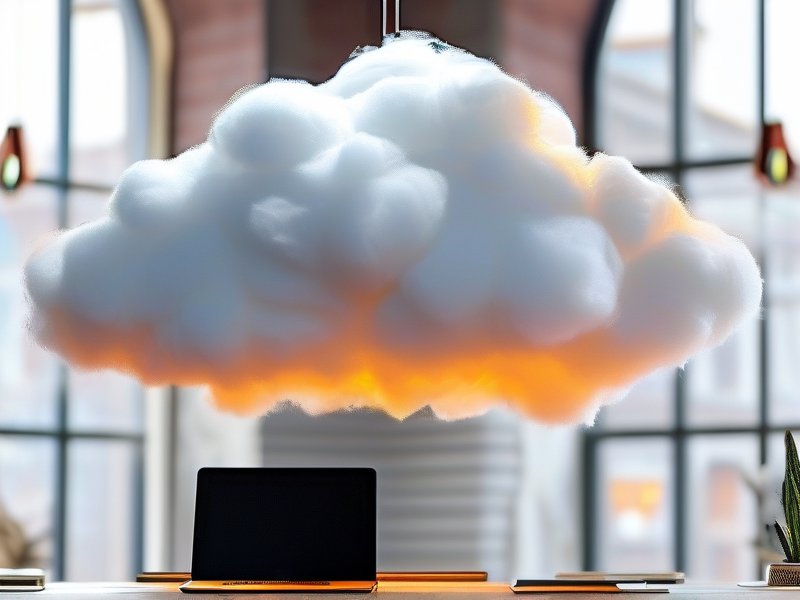
Introduction: The Evolution of Workstation Computing
In an era where productivity hinges on seamless access to high-performance resources, traditional workstations are increasingly struggling to keep pace with evolving demands. Modern professionals—from graphic designers to software developers—require instant access to powerful computing capabilities without the constraints of physical hardware. Enter cloud-driven workstations, a transformative solution that delivers enterprise-grade computing power on-demand through the cloud. By leveraging platforms like EdgeNode Cloud PC, users can now unlock instantaneous performance, flexibility, and scalability previously confined to dedicated hardware.
Key Advantages of Cloud-Driven Workstations
The shift to cloud-based workstations represents more than just a technological upgrade—it’s a paradigm shift in how professionals approach their workloads. Here are the three most compelling benefits:
- Instant Performance On-Demand: Cloud PCs eliminate the wait for hardware procurement and setup. Users can provision a fully configured workstation with top-tier GPUs, RAM, and storage within minutes. For instance, architects needing 3D rendering power can immediately access an NVIDIA RTX 6000 equivalent GPU without waiting for physical delivery.
- Unparalleled Flexibility: Work from anywhere with true desktop parity. Engineers can run complex simulations on a laptop, tablet, or even a Chromebook while maintaining full access to their development environments. This mobility is critical for field professionals like construction managers needing real-time data analysis at job sites.
- Cost Efficiency Through Elasticity: Pay only for the compute power you use. Design studios no longer need to invest in overpowered workstations that sit idle between projects. Instead, scale resources up during crunch times and down during off-peak hours, reducing capital expenditures by up to 40%.
These benefits are further amplified by innovations like session persistence and multi-monitor support, ensuring a seamless experience whether working from home offices or airport lounges.
Practical Applications for Modern Professionals
Cloud workstations aren’t just theoretical advantages—they’re already revolutionizing industries. Here are three real-world scenarios demonstrating their value:
Scenario 1: Creative Professionals
Visual effects artists at production companies like XYZ Studios now use cloud PCs to handle 8K video editing and ray tracing. By offloading processing to EdgeNode’s cloud infrastructure, they’ve reduced render times by 60% while enabling remote collaboration. Team members in different time zones can simultaneously edit the same project files without version control headaches.
Scenario 2: Software Developers
Agile teams at startups leverage cloud workstations for CI/CD pipelines. Developers spin up transient environments for testing without compromising local machine performance. The ability to recreate production-like conditions on demand has cut debugging time by 30%, according to a case study from TechForge Solutions.
Scenario 3: Remote Enterprises
Global firms like ABC Corp deploy cloud PCs to unify their distributed workforce. Employees in 15+ countries access identical desktop environments with instant application launch times. IT administrators manage updates centrally, reducing support tickets related to compatibility issues by 75%.
These examples highlight how cloud workstations solve critical challenges across industries. For optimal results, consider these implementation tips:
- Prioritize low-latency connections using dedicated networks for latency-sensitive tasks like live video editing
- Implement granular access controls to protect sensitive data through role-based permissions
- Pair cloud PCs with cloud storage integrations (e.g., AWS S3, Google Drive) for seamless file management
Choosing the Right Cloud Workstation Solution
With numerous providers in the market, evaluating options requires careful consideration of key factors:
Performance Specifications
Look for providers offering:
- GPU options ranging from Quadro RTX to AMD Radeon Pro
- Flexible RAM configurations (up to 128GB)
- Storage tiers from SSD to NVMe for varying workload needs
Network Infrastructure
Latency-critical users should prioritize solutions with:
- Global edge locations to minimize data travel distance
- Support for hardware-based virtualization (Intel VT-d/AMD-Vi)
- Option for dedicated bandwidth allocations
Total Cost of Ownership
Compare:
- Hourly vs. monthly pricing models
- Cost of unexpected scaling
- Additional charges for high-throughput storage
- Reduce hardware-related downtime by 90%
- Improve team collaboration through unified environments
- Adapt quickly to changing project demands
Providers like EdgeNode stand out with their pay-per-minute billing and pre-configured templates for common workflows, making it easy to match requirements with costs.
Conclusion: Empowering the Future of Work
Cloud-driven workstations are no longer a luxury—they’re becoming essential infrastructure for professionals seeking to maximize productivity in an increasingly distributed world. By harnessing the power of scalable cloud computing, organizations can:
As hybrid work models become the norm and computational demands grow, investing in a cloud PC solution like EdgeNode Cloud Workstation positions professionals to not just keep up, but to lead in their fields. The future of work is in the cloud—and it’s time to seize that power.